

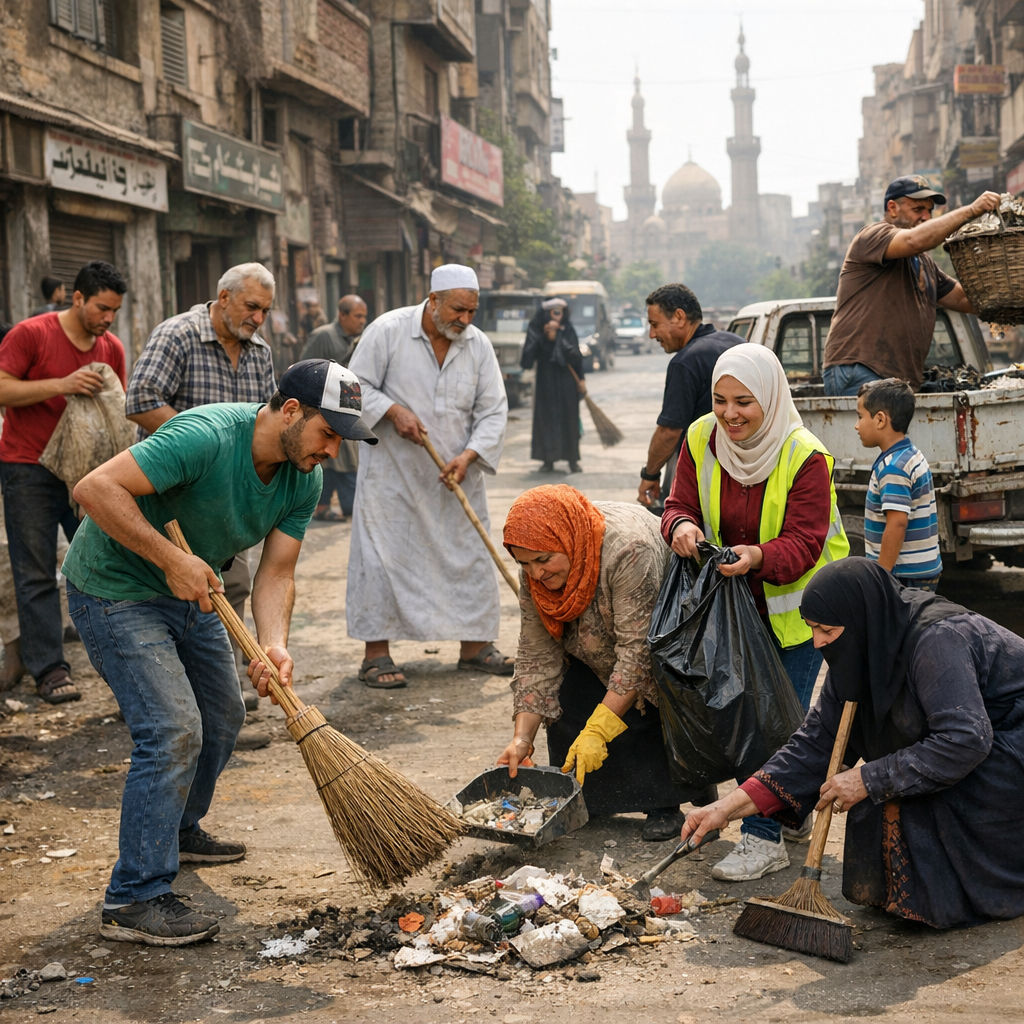
In Cairo, the city is made by its people as much as it is by its buildings and roads. From informal alleyways to grand colonial architecture, the neighborhood is where daily life unfolds—and often where the gap between residents and decision-makers feels widest.
The Gap We Feel
Many in Cairo report that essential services, traffic planning, public spaces, and even green areas are managed with little input from those who live there. In parts of Heliopolis and Nasr City, residents complain that rising new buildings overwhelm the character of the district, yet approvals often occur without local discussion. Many walk past neglected historic façades every day, unsure who is responsible, or who to ask. It’s common to feel unheard.
What Local Activism Looks Like Now
Despite frustrations, people are not waiting. Groups of neighbours, youth and professionals across districts—formal and informal—are stepping up:
- They share concerns on Facebook or WhatsApp about littered streets, broken sidewalks, or unsafe crossings.
- They organize clean-ups together, plant trees or revive small community gardens.
- They demand more accountability: asking local offices for explanations of contracts, or pushing for public notices before large construction.
Why This Matters
Every stretch of pavement, every streetlight, every tree or park is part of our daily fabric. When residents help shape these, it strengthens trust, improves safety, encourages walking, and builds pride. It also often leads to more efficient use of resources and slower deterioration.
How We Can Make Our Voices Stronger
Here are ideas neighbors could consider:
- Create or support neighborhood committees. A group of regular residents can bring collective ideas forward more powerfully than individuals alone.
- Use social media but translate digital energy into action. A post about a problem gains traction—but pairing it with direct contact to the relevant ward or governorate office can turn awareness into improvement.
- Engage with official consultation processes. Find out when local authorities open feedback periods, or when “informal” forums are held—lodge concerns while change is still possible.
- Keep heritage alive. Advocate for sensitive restoration, encourage community art, protect architectural character so that newer developments don’t erase what’s valuable.
Final thought
Change rarely comes all at once. It often takes small acts—cleaning a garden, writing a letter, forming a group—to shift the status quo. But in Cairo, when we listen to each other, build together, and insist on being part of decisions, we make a city that’s more caring, more liveable, and more ours.