

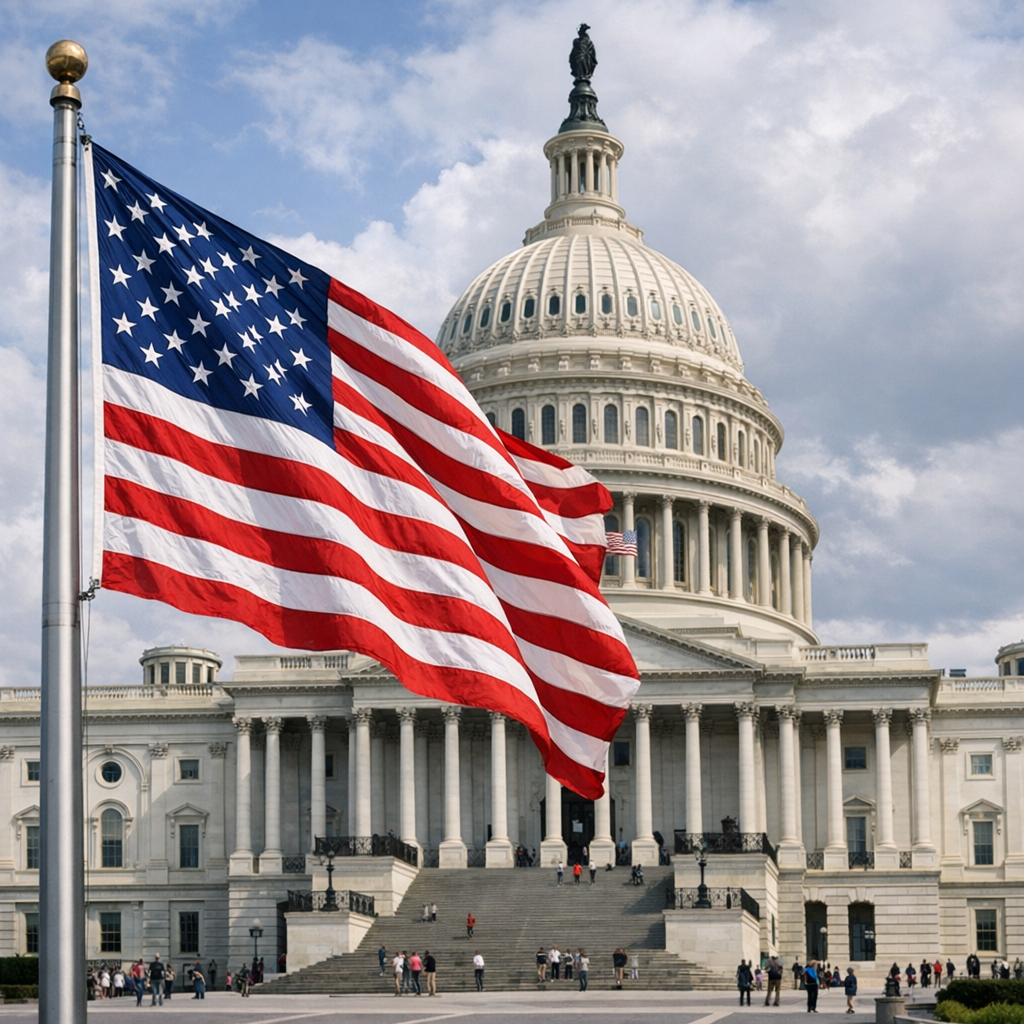
The United States is currently experiencing a dynamic political and economic environment, marked by significant developments that have both domestic and international implications.
Political Climate
Recent polling indicates a heightened level of public concern regarding the U.S. political system. Approximately one-third of Americans identify politics and government as the nation’s most pressing issues. This sentiment is particularly pronounced among older demographics, while younger Americans are more focused on economic challenges such as housing affordability and basic needs.
Economic Overview
The U.S. economy is exhibiting a mix of resilience and challenges. The International Monetary Fund (IMF) projects a 2.4% growth in the gross domestic product (GDP) for the fourth quarter of 2026, up from 2.2% the previous year. Unemployment rates are expected to decline from 4.5% in late 2025 to 4.1% in 2026, with inflation anticipated to reach the Federal Reserve’s 2% target by 2027. However, the IMF also warns of potential risks stemming from rising federal budget debts and the impact of tariffs.
In the labor market, the June jobs report indicates a slowdown in hiring and an increase in long-term unemployment, suggesting underlying weaknesses despite overall economic growth.
Implications for Egypt
For Egypt, these developments in the U.S. hold particular significance. The U.S. is a key trading partner and a major source of foreign direct investment. Fluctuations in the U.S. economy can influence global markets, affecting Egypt’s export sectors and foreign exchange reserves. Additionally, shifts in U.S. political dynamics may impact bilateral relations and aid agreements.
Staying informed about these trends is crucial for policymakers and businesses in Egypt to navigate potential challenges and seize opportunities arising from the evolving U.S. political and economic landscape.