

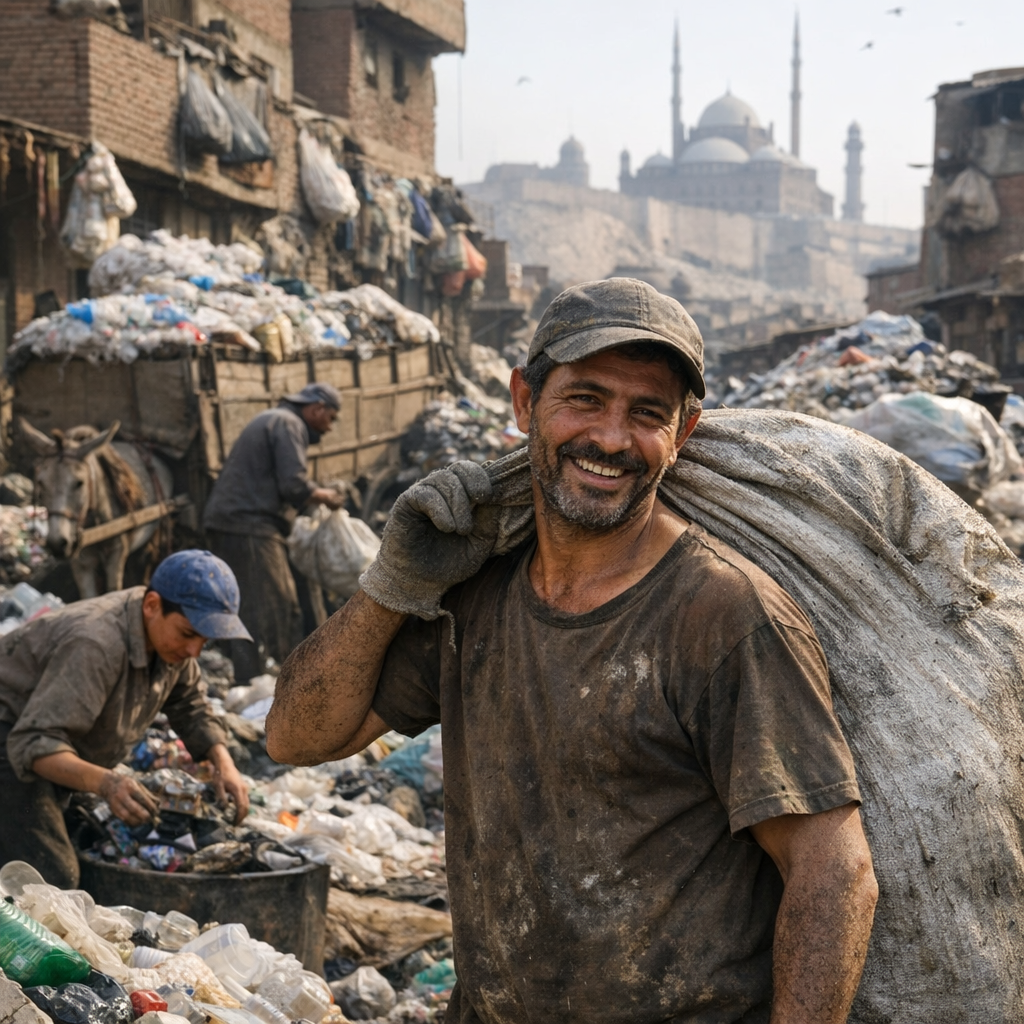
In the heart of Cairo lies Manshiyat Naser, colloquially known as ‘Garbage City,’ home to the Zabbaleen community. This predominantly Coptic Christian group has been integral to Cairo’s waste management since the 1930s, developing a highly efficient recycling system that processes approximately 9,000 of the city’s 15,000 tons of daily household waste.
The Zabbaleen collect waste directly from households, sorting and recycling up to 85% of it—a stark contrast to the 25% average in Western cities. Their methods include repurposing organic waste into animal fodder and compost, and recycling materials like plastic, glass, and metal. This community-driven approach not only manages waste effectively but also provides livelihoods for thousands.
Despite their contributions, the Zabbaleen have faced challenges, including marginalization and limited access to health and social services. Recent initiatives aim to integrate their informal practices into formal waste management systems, recognizing their role in promoting sustainability and environmental stewardship.
The Zabbaleen’s model offers valuable insights into community-based recycling, highlighting the potential of grassroots initiatives in addressing urban waste challenges.