

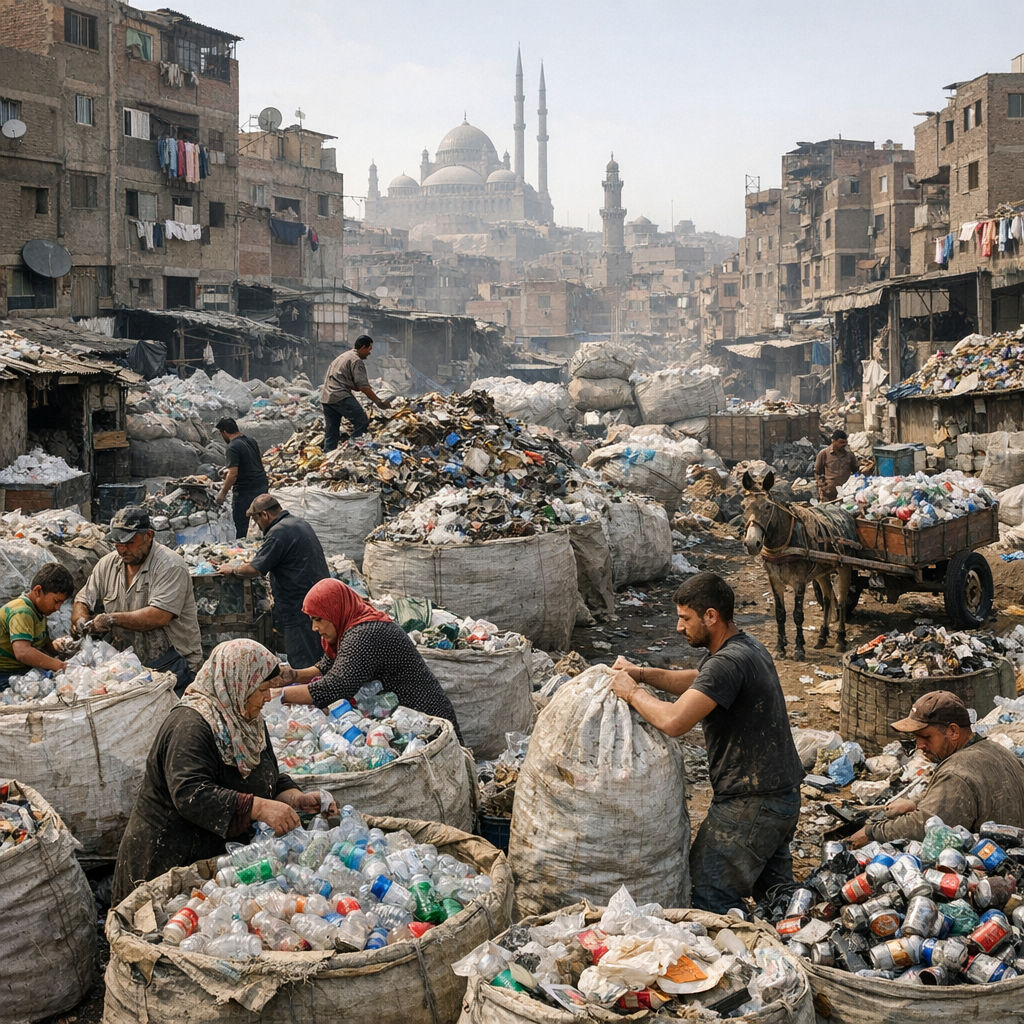
In the heart of Cairo’s Manshiyat Naser district, a community known as the Zabbaleen has transformed waste collection into a model of sustainability. For decades, this predominantly Coptic Christian group has been at the forefront of recycling, processing approximately 9,000 of the city’s 15,000 tons of daily household waste. Their efforts have resulted in one of the world’s most efficient recycling systems, with recovery rates reaching up to 85% of collected materials.
The Zabbaleen’s approach involves meticulous sorting and repurposing of waste. Families specialize in different types of materials, such as plastics, paper, and metals, which are cleaned and sold to local industries. Organic waste is often used to feed livestock or converted into compost, contributing to urban agriculture.
Despite their significant contributions, the Zabbaleen have faced challenges, including marginalization and limited access to health and social services. However, their resilience and innovative practices have garnered international recognition, positioning them as pioneers in sustainable waste management.
As Cairo continues to grapple with waste management issues, the Zabbaleen’s model offers valuable insights into community-driven solutions that combine environmental sustainability with economic empowerment.