

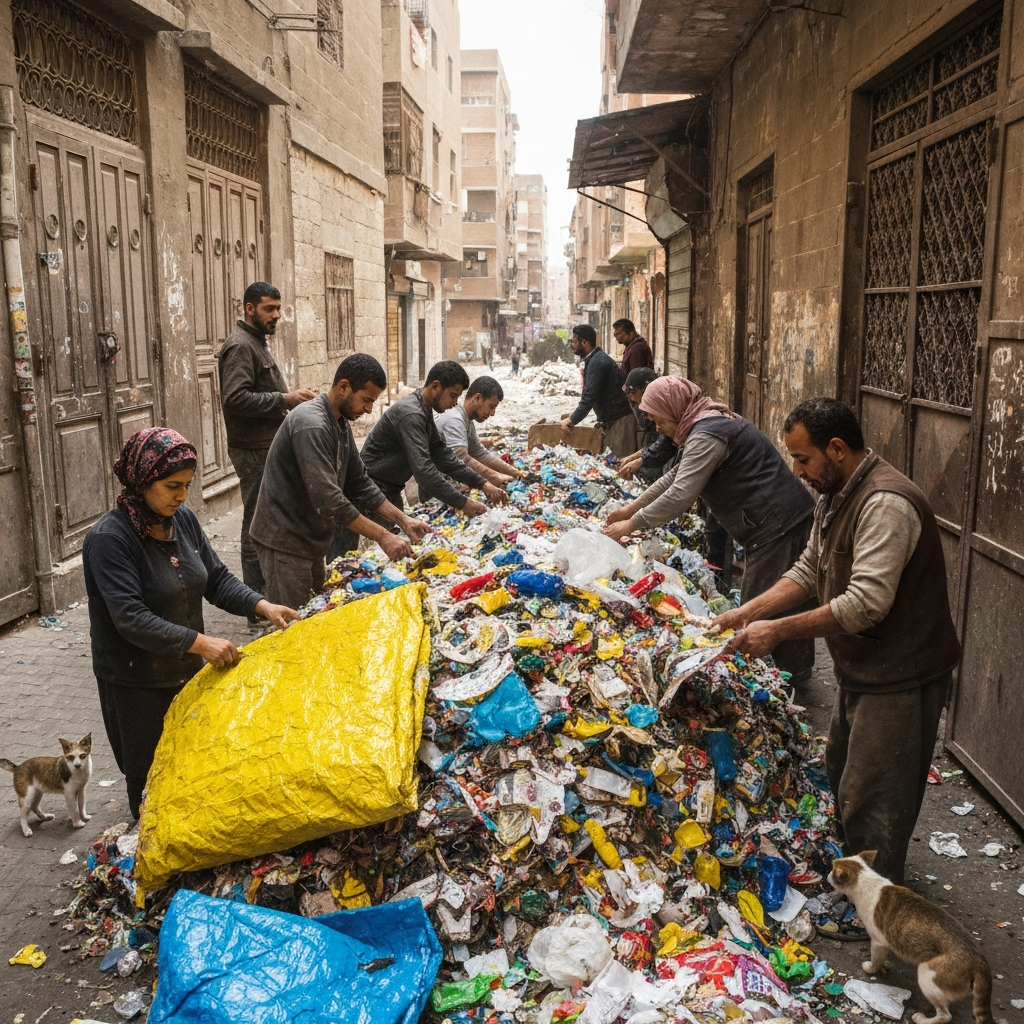
In the heart of Cairo lies Manshiyat Naser, colloquially known as ‘Garbage City,’ home to the Zabbaleen community. This predominantly Coptic Christian group has been integral to Cairo’s waste management since the 1930s, developing a highly efficient recycling system that processes approximately 9,000 of the city’s 15,000 tons of daily household waste.
The Zabbaleen collect waste directly from households, sorting and recycling up to 85% of it—a rate significantly higher than many formal waste management systems worldwide. Their methods include separating plastics, metals, and organic materials, which are then sold to factories or used to produce goods like compost and animal feed.
Despite their contributions, the Zabbaleen have faced challenges, including marginalization and limited access to health and social services. However, their resilience and innovative practices have garnered international recognition, positioning them as pioneers in sustainable waste management.
Efforts to integrate the Zabbaleen’s informal system with formal waste management initiatives continue, aiming to enhance Cairo’s overall waste processing capabilities while preserving the community’s livelihood and environmental contributions.