

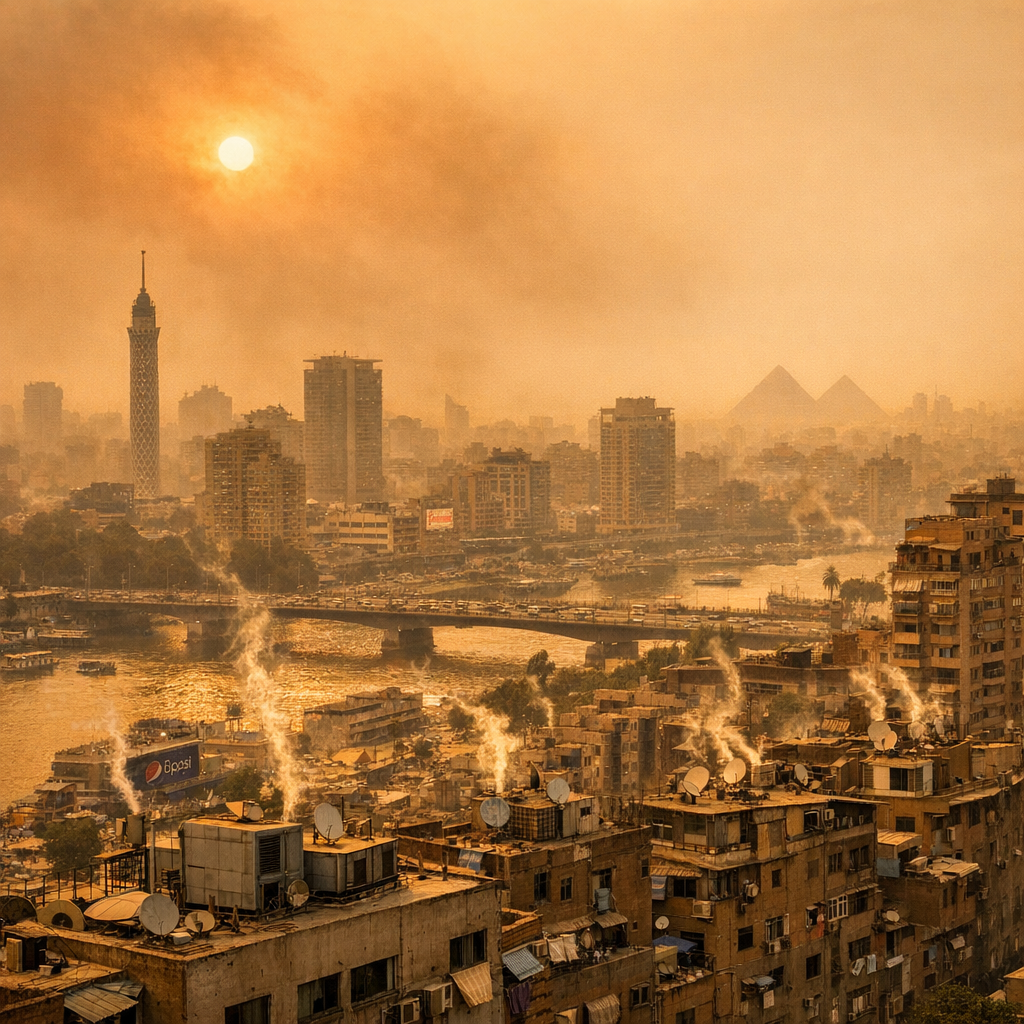
Cairo, Egypt’s bustling capital, is experiencing significant environmental shifts attributed to climate change. Rising temperatures, altered precipitation patterns, and increased frequency of extreme weather events are impacting the city’s infrastructure, public health, and daily life.
Rising Temperatures and Urban Heat
Over the past decades, Cairo has witnessed a steady increase in average temperatures. Studies indicate that the city is affected by the urban heat island effect, leading to higher temperatures compared to surrounding rural areas. This phenomenon exacerbates the challenges posed by global warming, making urban adaptation strategies crucial. Source
Impact on Public Health
The health implications of rising temperatures are profound. Vulnerable populations, including pregnant women and young children, are particularly susceptible to heat-related illnesses. A vulnerability assessment conducted in Cairo’s informal settlements highlighted the need for targeted interventions to protect these groups from heat stress. Source
Environmental Degradation
Climate change also threatens Cairo’s green spaces. Public parks, essential for recreation and ecological balance, are experiencing declining vegetation and increased irrigation needs. Research on parks like the International Park and Maadi Island underscores the negative impact of climate change on urban greenery. Source
Adaptive Strategies
Addressing these challenges requires comprehensive adaptation strategies. Enhancing urban planning to incorporate green infrastructure, improving public transportation to reduce emissions, and implementing heat action plans are vital steps. Community engagement and education on climate resilience can empower residents to participate actively in mitigation efforts.
As Cairo continues to grow, integrating climate adaptation into development plans will be essential to ensure a sustainable and livable environment for all its residents.